Decoding Food Labels
Your Guide To Smart Eating

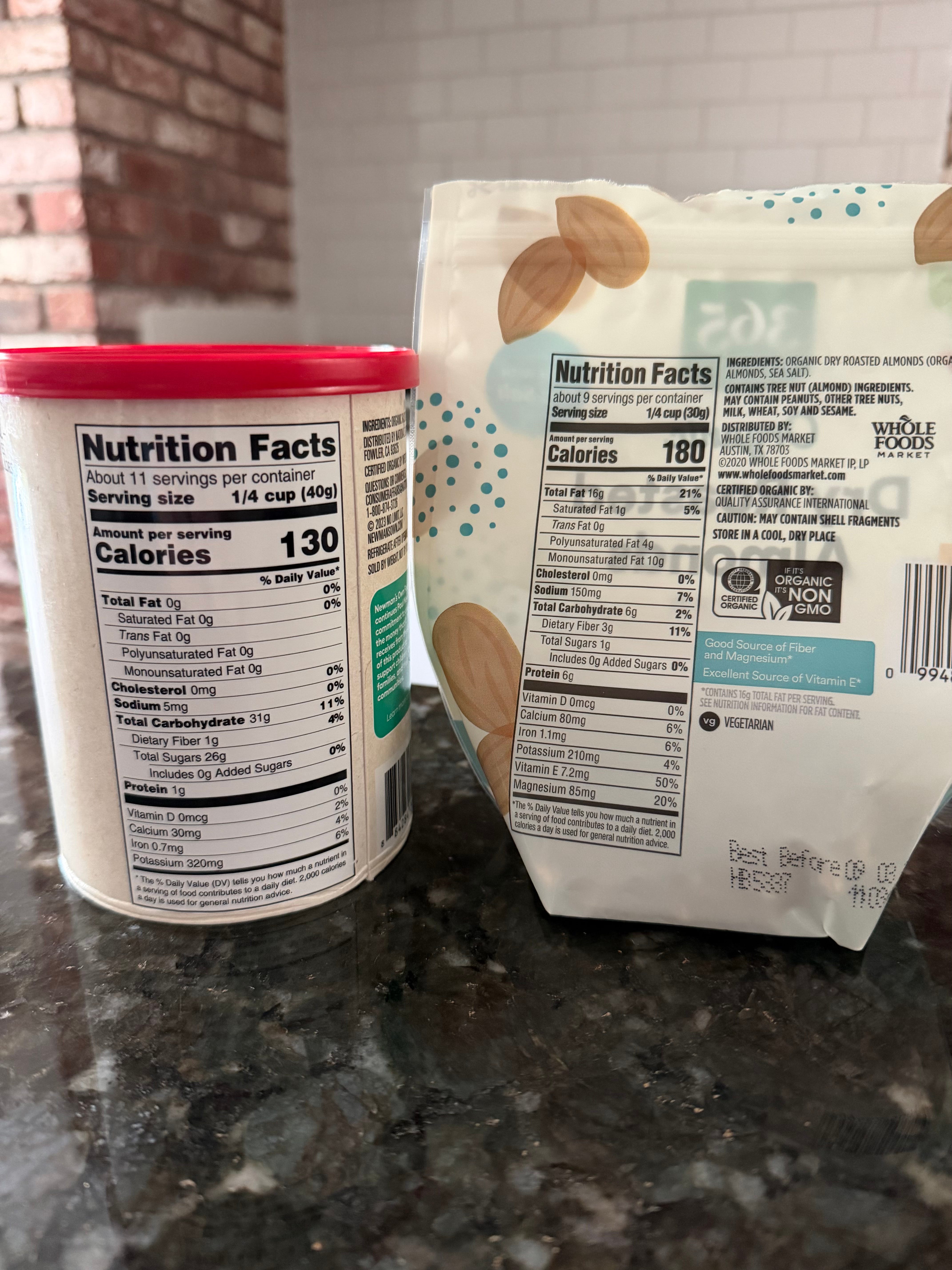
A couple of times a year, I speak to middle school students about nutrition. I have found that the most effective way to do this is to teach them how to read the food label. The honest, brave, and intelligent questions that arise from this simple exercise never cease to amaze me.
“I heard that eating 1200 calories is the best way to lose weight.”
“Why are there two different fibers, and how much should you have of each?”
“Does everyone need carbohydrates?”
“Isn’t it illegal to confuse consumers?”
I do my best to answer each of these questions while still covering the topic at hand, knowing that my answers will likely lead to more great questions. At the end of the day, I encourage everyone to eat more foods without labels, such as fresh fruits and vegetables. However, the reality is that we are all short on time, and not all packaged food is bad. In the nutrition world, we divide foods into four categories.
Unprocessed foods are those in their natural state and have not been altered from their original state, like a whole apple, a carrot, or oatmeal groats.
Minimally processed foods are those that have undergone slight changes for convenience but retain most of their original qualities. Examples include pre-sliced fruit, baby carrots, or steel-cut oats.
Processed: Unsweetened applesauce, pureed carrots, or instant oats.
Ultraprocessed: Gummies made with artificial dye and preservatives, carrot cake, packaged oatmeal cookies.
The reality is that the world and our lives are complex, and most of us can’t find the time to eat only unlabelled food. If this is you, THIS IS OK. Of the three groups above, ultraprocessed foods are those that we should limit as much as possible. The other groups all have smarter options that can make living a healthy life easier.
Do you know how to read a food label? If you are a parent or a caregiver, have you discussed reading food labels with your kids?
Here are my top tips for quickly and easily navigating food labels so that you can make the healthiest choices for your family while still getting through the day.
Look at the ingredient list. This is usually found at the bottom of a food label. As a rule of thumb, the fewer ingredients, the better. Look for more whole ingredients such as oats, seeds, fruits, vegetables, brown rice, nuts, or 100 percent whole wheat. If the ingredient list is loaded with preservatives, stabilizers, and natural and artificial flavors, you most likely want to choose a better option.
Next, look at key nutrients. Most Americans are consuming too much added sugar, salt (sodium), and saturated fat. To limit these nutrients in packaged food, look at the percent daily value. The Food and Drug Administration classifies foods as low in a certain nutrient if the percent daily value is 5% or less and high in a certain nutrient if it contains 20% or more of your daily value. Ideally, saturated fat would be 5% or less, sodium would be 10% or less, and added sugar would be 5% or less.
Finally, check the serving size. It might not be realistic. For example, cereal servings can range from 1/2 to 1/1/2 cups. Does the serving size on your desired cereal reflect your eating habits? I know I like to eat a bigger bowl of cereal, so I generally choose lighter puffy cereals that are still nutrient-dense such as shredded wheat or whole grain puffs and have a larger serving size.
At the end of the day, the healthiest eaters make nutrient-dense choices most of the time, but don’t get caught up in the occasional treat or misstep. Remember, healthy eating is the marathon of a lifetime and requires a plan you can stick to, not a short-term sprint that keeps changing.